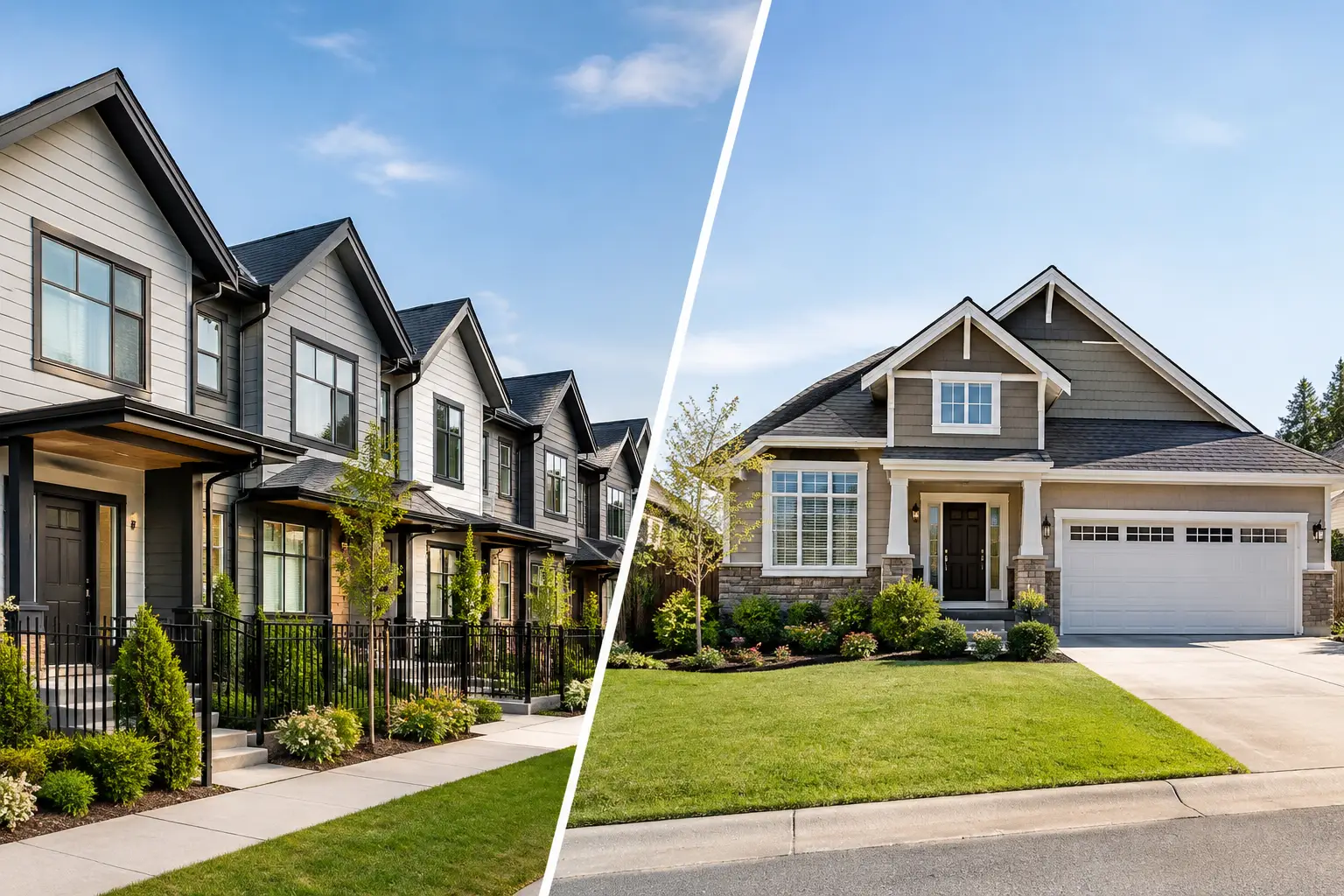
A townhouse versus single family home decision often comes down to more than bedrooms, square footage, and the listing price. In Palm Beach County, the better fit may depend on how much time you want to spend on upkeep, whether you value a private yard, and how comfortable you are with an HOA’s rules and monthly costs.
A townhouse can offer an appealing path to ownership with less exterior responsibility. A single-family home can provide more independence and room to grow. Neither is automatically the better investment or the better lifestyle choice. The right property is the one that supports the way you live now while still making sense for your next few years.
Townhouse Versus Single Family Home: The Main Difference
A townhouse is typically an attached home that shares one or two walls with neighboring residences. It often has multiple levels, its own entrance, and a small patio, courtyard, or backyard. Many townhouses are part of a homeowners association that sets community standards and collects monthly or quarterly fees.
A single-family home is generally a detached property on its own lot. You do not share walls with a neighbor, and you usually have more direct control over the exterior, landscaping, driveway, roof, and outdoor space. Some single-family homes are also located in HOA communities, so detached does not always mean fee-free or rule-free.
That distinction matters in South Florida. Communities can vary widely in what they maintain, what they restrict, and what owners are responsible for after closing. The details in the HOA documents and the property’s condition matter as much as the property type.
When a Townhouse May Be the Better Fit
Townhouses are often a practical choice for first-time buyers, busy professionals, seasonal residents, and anyone who would rather not spend weekends handling major yard work. In many communities, the association takes care of common areas and may cover landscaping, exterior painting, roof maintenance, pest control, pool service, or insurance for shared structures. Coverage varies, so buyers should confirm exactly what the fee includes.
The purchase price of a townhouse may also be more approachable than a comparable detached home in the same area. That can help a buyer enter a desirable Palm Beach County location, stay closer to work, or preserve more funds for closing costs and reserves.
A well-managed townhouse community can also provide amenities that would be expensive to maintain privately, such as a pool, fitness room, security gate, playground, or clubhouse. For some buyers, having these features nearby without personally managing them is a meaningful advantage.
There are trade-offs. Shared walls can mean more awareness of neighboring activity, although construction quality and layout make a real difference. Staircases may be inconvenient for buyers planning to age in place, those with young children, or anyone who prefers single-level living. Outdoor areas are typically smaller, and parking rules can be stricter than they are with a detached home.
HOA fees deserve a closer look
An HOA fee should never be viewed as just another monthly number. Ask what services it covers, whether the community has adequate reserves, and whether special assessments are possible or already planned. Review the association’s financial documents, meeting notes, rules, rental restrictions, pet policies, and approval process before making a final decision.
In South Florida, insurance and roof expenses can place pressure on association budgets. A lower monthly fee is not always a better value if deferred maintenance or limited reserves could lead to a larger assessment later. A careful review helps buyers understand the full cost of ownership rather than focusing only on the mortgage payment.
When a Single-Family Home May Be the Better Fit
A single-family home often appeals to buyers who want privacy, more storage, a larger lot, or more flexibility in how they use their property. A detached home may offer space for a pool, garden, pets, outdoor entertaining, a growing family, or visiting relatives. It can also provide the quiet of not sharing a wall with another household.
Control is another major benefit. If there is no HOA, you can generally make more decisions about exterior colors, landscaping, parking, and improvements, subject to local permits and ordinances. Even in an HOA community, a single-family home usually offers more physical separation and a stronger sense of individual ownership.
For move-up buyers, that extra room can be especially valuable. A larger garage, home office, guest room, or fenced yard may improve daily life in ways that are hard to measure during a quick showing.
The responsibility is greater, too. Owners are responsible for maintaining the roof, exterior walls, lawn, trees, irrigation, driveway, pool, fencing, and drainage. In Palm Beach County, that also means staying attentive to storm preparation, wind mitigation, hurricane shutters or impact protection, and insurance requirements. Repairs do not need association approval in every case, but they do need your time, planning, and budget.
Compare the Real Monthly Cost, Not Just the Price
A townhouse with an HOA fee can look more expensive at first glance, while a single-family home without a fee can appear simpler. The honest comparison includes all recurring expenses.
For a townhouse, consider the mortgage, property taxes, HOA fee, homeowners insurance, utilities, and any maintenance not covered by the association. For a single-family home, consider the mortgage, taxes, insurance, utilities, lawn care, pool care if applicable, pest control, and a realistic reserve for repairs and replacements.
Insurance deserves special attention in South Florida. The type of policy, deductible, roof age, wind mitigation features, flood zone, and community structure can all affect costs. A townhouse association may insure portions of the building, but the buyer may still need an individual policy for the interior, personal property, liability, and certain building components. Do not assume the HOA policy protects everything inside your walls.
A lender can help estimate loan-related costs, but an experienced local real estate professional can help you ask the right property-specific questions before you commit. A clear budget should account for the expected payment and the costs that do not appear in a listing headline.
Lifestyle Questions That Make the Choice Clearer
Start with your normal week, not just your ideal weekend. If you travel frequently, have a demanding schedule, or prefer a lock-and-leave home, a townhouse may be more comfortable. If you picture hosting family gatherings, letting a dog run in a fenced yard, or having room for tools and outdoor equipment, a single-family home may better support that lifestyle.
Also think ahead. Will stairs become a concern? Do you expect to work from home long term? Is a private pool a goal or an expense you would rather avoid? Are you comfortable following HOA rules about vehicles, exterior changes, leasing, and guests? These questions are personal, but they often point buyers toward a clearer answer than square footage alone.
Location can change the equation as well. A townhouse near the places you visit every day may deliver more value to your routine than a larger detached home with a longer commute. On the other hand, buyers who need more land or want fewer community restrictions may find that moving farther from the most central locations is worthwhile.
Think About Resale From the Beginning
Both townhouses and single-family homes can sell well when they are correctly priced, well maintained, and located in communities buyers want. Resale is shaped by neighborhood appeal, condition, school preferences, nearby employment, amenities, insurance costs, and the competition available when you list.
Townhouses can attract buyers looking for affordability and convenience, especially when the community is clean, financially sound, and well managed. But high fees, restrictive rental rules, pending assessments, or poorly maintained common areas can narrow the buyer pool.
Single-family homes often attract buyers seeking yard space and privacy, but they can require more preparation before sale. An aging roof, neglected landscaping, outdated systems, or unresolved permit issues can affect marketability and negotiations. The property type matters, but the condition and community reputation matter just as much.
Make the Decision With the Full Picture
The best choice is not about choosing the property type that sounds more impressive. It is about choosing a home whose costs, maintenance demands, location, and daily experience fit your priorities. Before writing an offer, compare the homes side by side, review association documents carefully where applicable, and look beyond the monthly payment.
Buyers throughout Palm Beach County deserve clear answers before making a major commitment. Whether a townhouse gives you the freedom to enjoy more of your time or a single-family home gives you the space you have been waiting for, a thoughtful comparison can turn a stressful choice into a confident next step.
Leave a Reply